


Nvidia and SK hynix ink multi-year memory co-development and supply agreement — seeks to address extended development cycles

Nvidia and SK hynix have inked a multi-year collaboration agreement under which the companies will co-develop next-generation memory technologies for Nvidia’s upcoming platforms, and SK hynix will supply them to Nvidia. The deal is designed to ensure that Nvidia will get the memory it needs from a prominent supplier and will guarantee that SK hynix will be able to sell its output in a predictable manner.
Go deeper with TH Premium: Memory
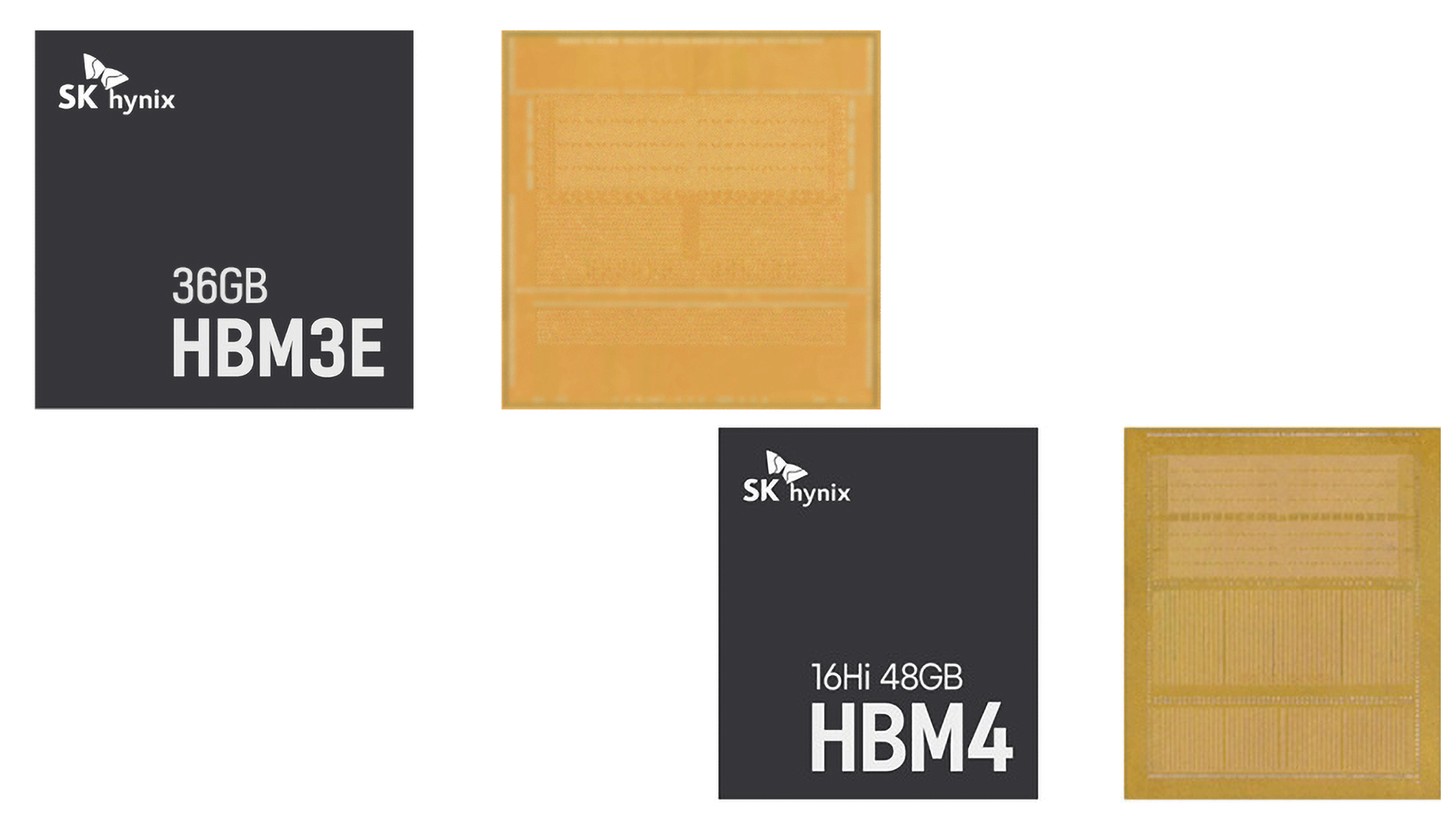
The key part of the agreement is indeed the co-development of advanced memory products designed for Nvidia’s future platforms. Currently, Nvidia uses HBM, LPDDR5X, DDR5, and 3D NAND memory in various systems, so going forward, SK hynix will develop its new memory with Nvidia in mind. The joint press release says nothing about customization of memory for Nvidia, and while we cannot exclude such a possibility, it looks like the companies will continue to co-develop industry-standard solutions, but will ensure that they are compatible with Nvidia’s processors.
In addition, the agreement is intended to address the increasingly long lead times and massive capital expenditures required for the production of advanced types of memory. The two companies will coordinate roadmaps over multiple years. Nvidia will gain greater visibility into future memory availability, while SK hynix secures a guaranteed role in Nvidia’s next-generation platforms (i.e., guaranteed demand).

The initial part of the cooperation covers memory destined for NVIDIA Vera Rubin AI systems (HBM4, LPDDR5X, 3D NAND), standalone Vera processors (LPDDR5X), RTX Spark-powered personal computers (LPDDR5X, 3D NAND), and Jetson Thor robotic computing systems (LPDDR5X, 3D NAND).
The deal also extends to semiconductor research and design. SK hynix is deploying Nvidia’s CUDA-X libraries to speed up complex chip development workloads, such as technology computer-aided design (TCAD) and computational lithography (CuLitho). In addition, the memory maker is adopting Nvidia PhysicsNeMo to accelerate proprietary simulation software as well as AI-driven physics models used during semiconductor development. In addition, the companies see an opportunity to expand these capabilities into general electronic design automation (EDA) and simulation ecosystems and potentially create tighter relationships within the industry.
Last but not least, SK hynix is creating digital twins of its semiconductor fabs using Nvidia Omniverse and OpenUSD technologies. These virtual facilities enable engineers to model production lines, test changes, and optimize operations before making adjustments in real fabs. The company also plans to use Nvidia’s cuOpt and Metropolis platforms to improve the movement of autonomous robots and other factory equipment. In the future, SK hynix aims to connect these digital twins with existing manufacturing software and AI systems and enable them to analyze fab data, automate routine tasks, and help make production decisions.

Follow Tom’s Hardware on Google News, or add us as a preferred source, to get our latest news, analysis, & reviews in your feeds.