

Metal Turning: How CNC Machining Transforms a Rough Surface Into Smooth

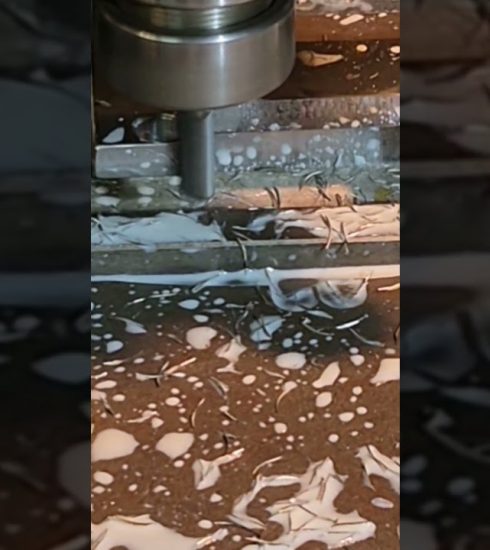
In modern manufacturing, turning is an important machining process for producing metal components with controlled shapes and surfaces. This video provides a close view of a machining process performed on a cylindrical metal component. The workpiece can be seen rotating while a cutting tool is positioned close to the working area. As the process continues, the controlled interaction between the rotating component and the cutting tool gradually changes the surface, demonstrating how precision machining can transform a workpiece into a more refined and uniform component.
Throughout the video, the camera focuses on a round metal workpiece rotating on the machine. Its surface initially shows visible machining marks and fine linear patterns. Above the workpiece, a tool head or tool holder moves into position near the surface. The cutting area then works against the rotating metal. As the process continues, the surface appears progressively smoother and more consistent in its reflection. Several sections of the component also show different cylindrical levels or diameters, indicating that the machining process involves more than a single flat surface.
Visually, the cutting tool works by moving relative to the rotating workpiece. Contact between the tool and metal gradually removes material, changing the shape and surface texture. The video does not provide enough information to confirm the machine brand, cutting insert type, exact metal composition, workpiece dimensions, rotational speed, or machining parameters. Therefore, the process is described only from what can be observed: the workpiece rotates, the cutting tool remains positioned at the working area, and the metal surface changes as machining takes place.
From a productivity perspective, a machining process like this allows controlled and repeatable changes to be made to a metal component. The worked surface can become more uniform than its initial condition, while cylindrical sections can be maintained through the controlled movement of the cutting tool. In manufacturing environments, consistency is valuable because components with controlled shapes and surfaces can be more suitable for assembly or subsequent processing. A refined surface can also improve the practical value and appearance of a finished component.
The most compelling aspect of this process is the combination of machine movement and human precision. A metal surface showing visible machining marks is gradually transformed into a smoother and more reflective finish. The result does not appear instantly; it is created through the gradual removal of material. This process demonstrates that precision manufacturing is not simply about speed. It is about maintaining control throughout every stage. When technology, cutting tools, and human skill operate together in a disciplined process, an ordinary piece of metal can be transformed into a component with greater consistency, functionality, and value.
source